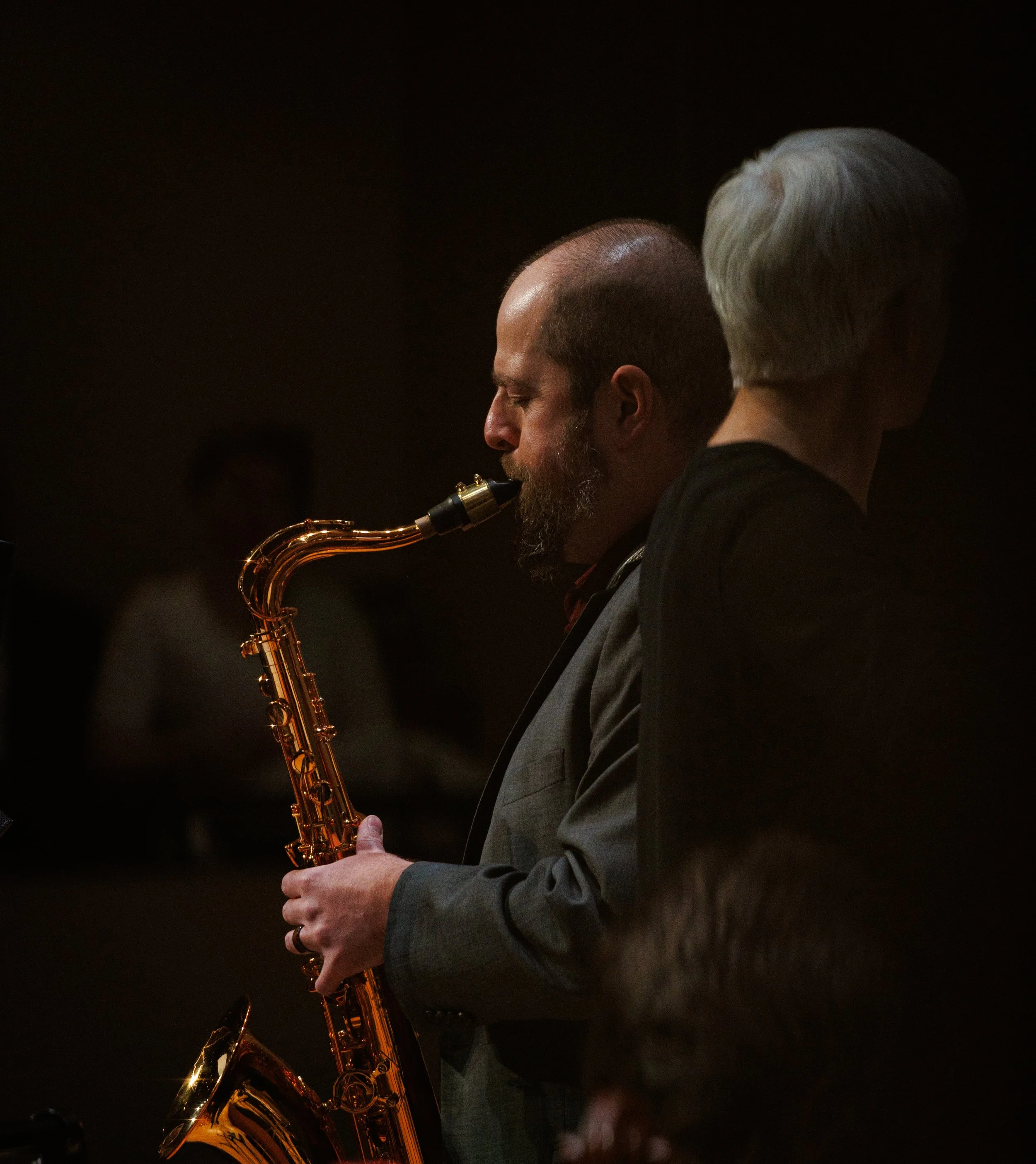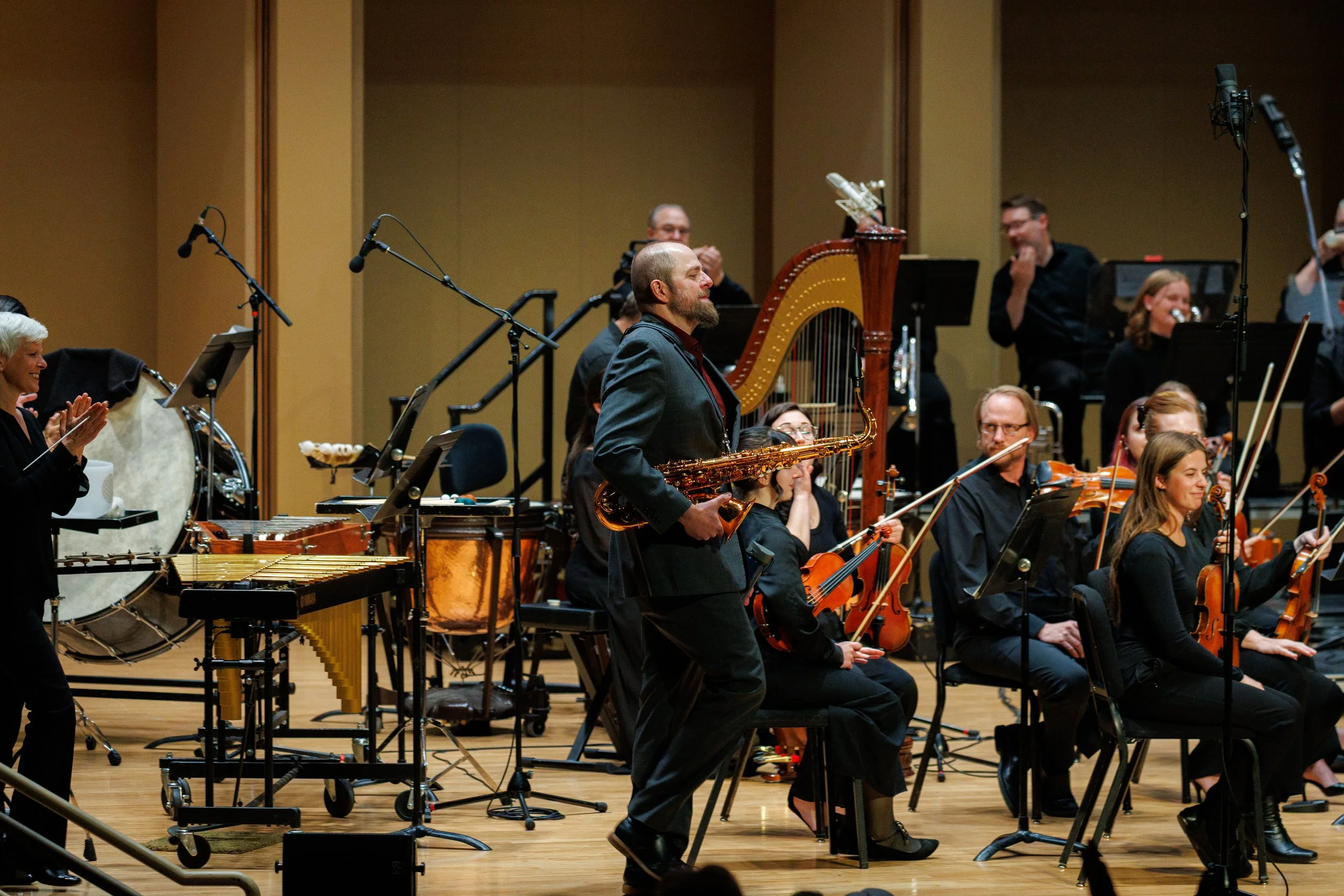
Concerto for Tenor Saxophone and Orchestra, with the Idaho State-Civic Symphony conducted by Nell Flanders
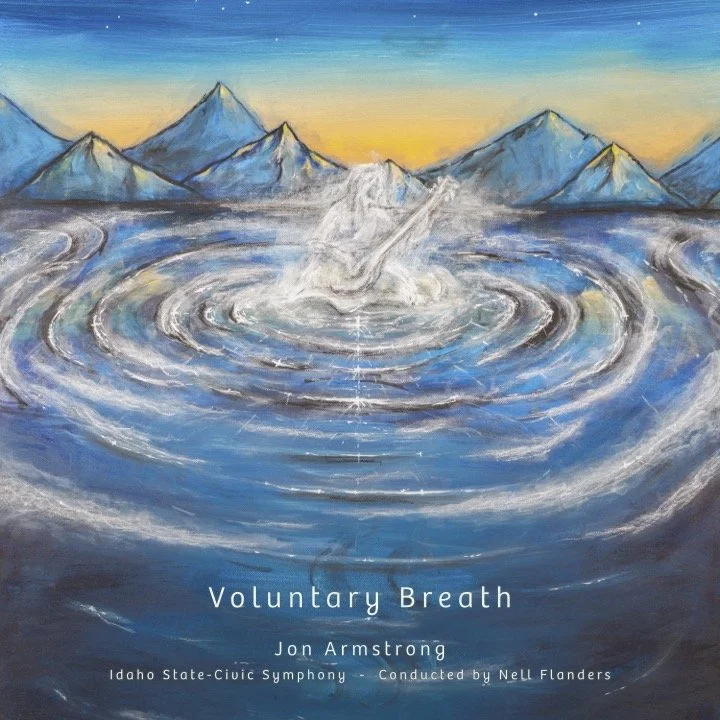
“Voluntary Breath” began as a way of exploring a dream I had: A shamanic figure, sitting in a lotus position, is floating over a mountain lake in deep meditation and holding a guitar-like instrument. As he strums his instrument, ripples emanate from him across the lake. He re-tunes his instrument and creates different patterns and frequencies across the water.
The meaning of this dream shifted when my son Breen was born four months premature in January of 2021, weighing only 1lb, 4.8 oz. He spent almost nine months in the Neonatal Intensive Care Unit. My wife Erin and I sat alongside our tiny boy in this prolonged existence of overlapping liminal spaces; he was here before he was ready to be born and yet he was teetering close to the end of life. Due to the brilliance and dedication of our medical team and the love and support from countless people in our lives, he is now healthy and doing exceptionally well.
The NICU soundscape was brutal. We were told how sensitive preemies are to stimulation, and we agonized over the invisible damage from these sonic assaults. Inspired by my dream, I attempted to “tune” my son’s room by singing simple melodies and drones in the key and tempo of the sounds of the machines that kept him alive. I tried to soothe the chaos in his environment.
Breen was on a ventilator for the first four months, and the doctors were often concerned that he was “breathing over the vent”. He was trying to breathe on his own, but he wasn't in rhythm with the programmed breathing rate, causing inefficient ventilation. We watched Breen struggle with the uncompromising and unnatural tempo of the ventilator, and my wife and I wondered if he would ever take a breath on his own.
I developed a deeper appreciation of my own breathing, this essential involuntary action constantly moving through me. I gained a more significant understanding why focused breath is the cornerstone of so many spiritual practices. As Thich Nhat Hanh writes, “If you breathe in and are aware that you are alive… you can touch the miracle of being alive.”
“Voluntary Breath” has three sections: The first is more melodic and fluid, representing the love and prayer that enveloped our son. The second is more angular and rhythmic, inspired by medical-speak, science, and machinery. The third section combines these two together: Songs of healing are set to the rhythms of ventilators, to the cadence of medical-ese. Multiple ripples locking into a groove. Breen is here and healthy today because of the love and prayers that surrounded him, and because of his medical care team’s skill and ingenuity with hospital equipment born of science and innovation. We needed everything working together, in time and in tune.
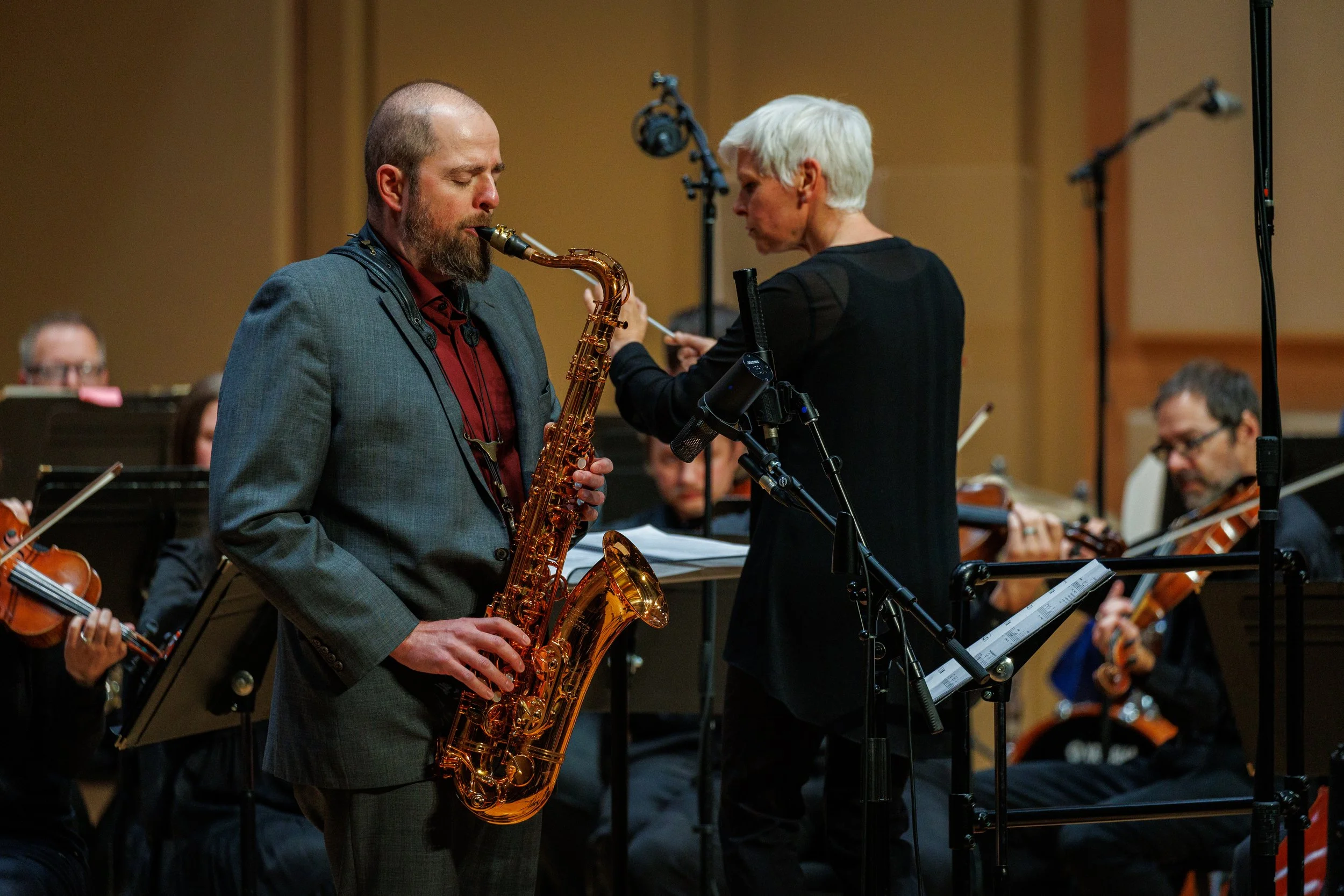
“Voluntary Breath” with the Idaho State-Civic Symphony (2025)